Welcome to WordPress. This is your first post. Edit or delete it, then start writing!
Blog
-
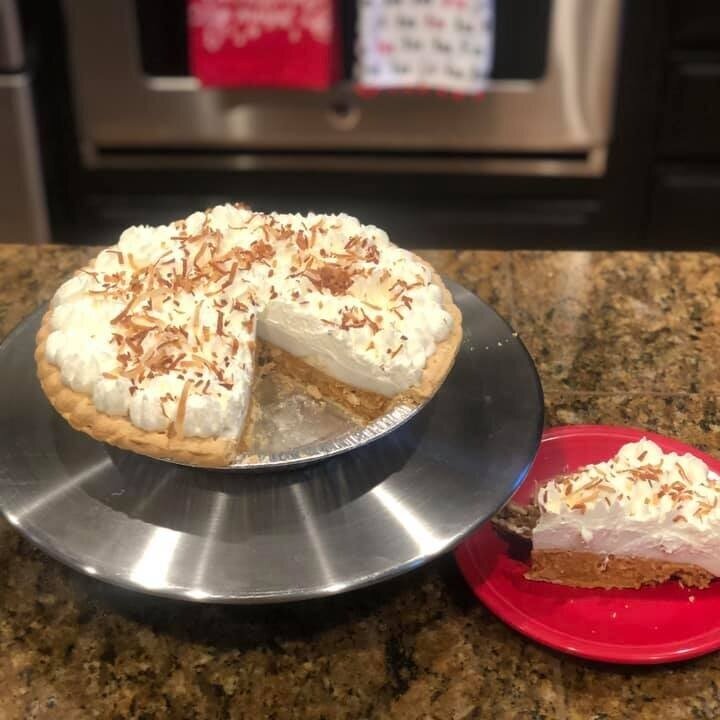
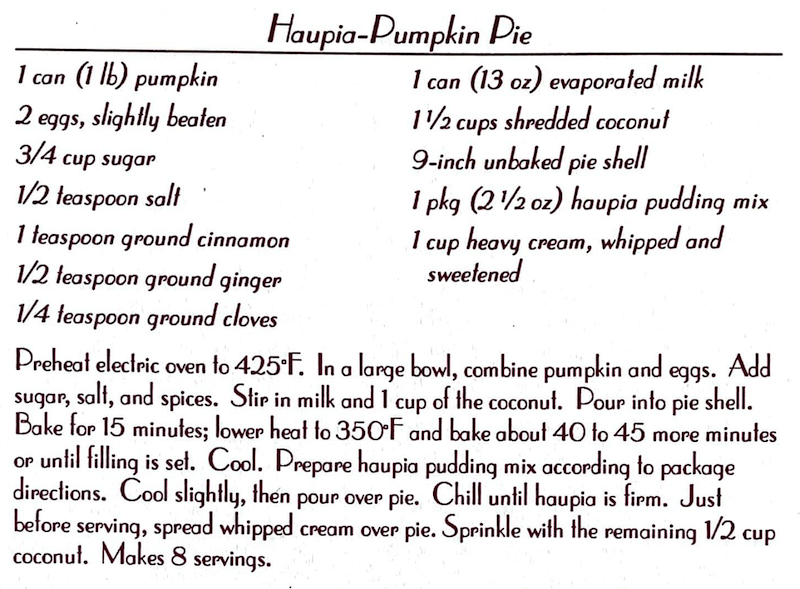
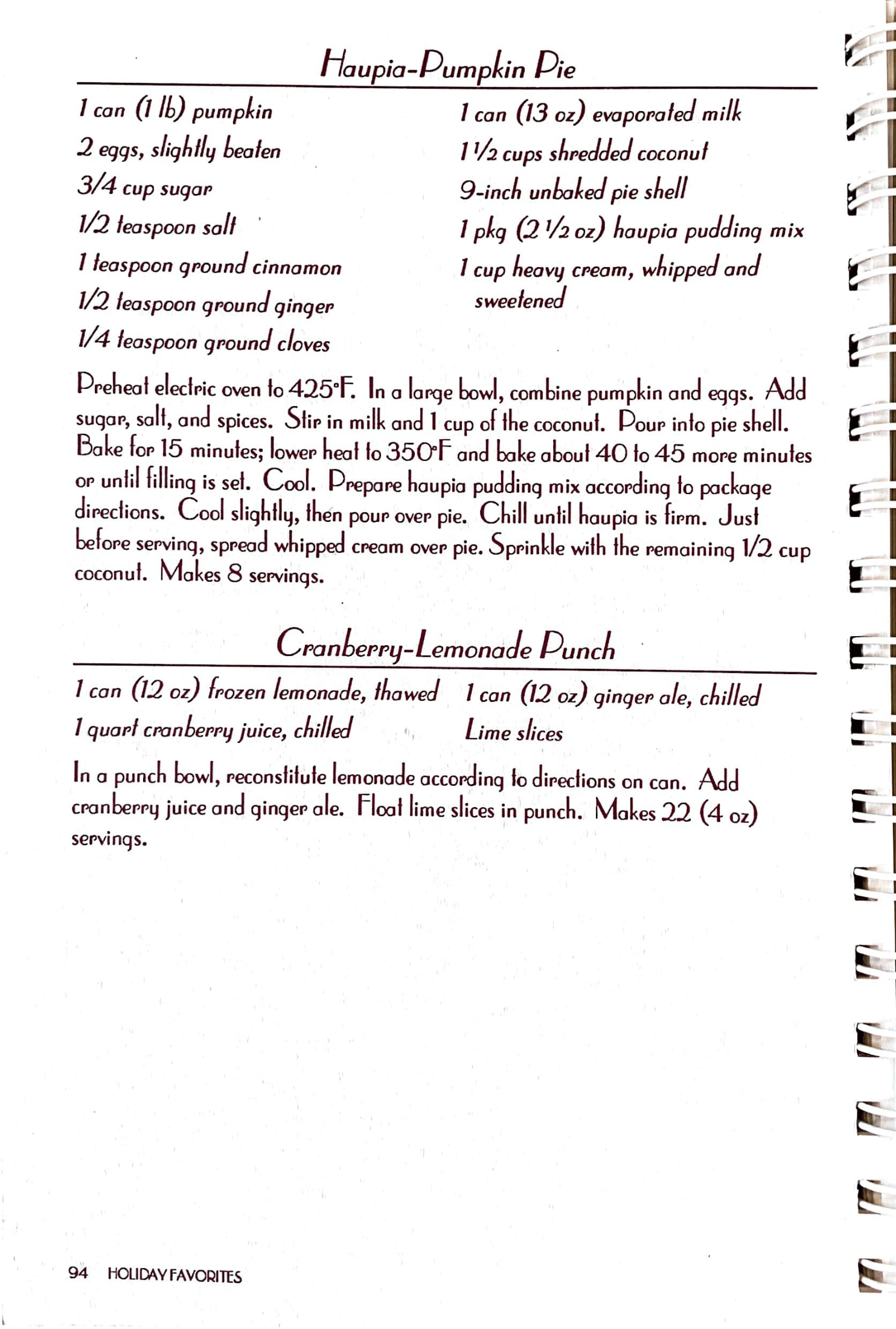
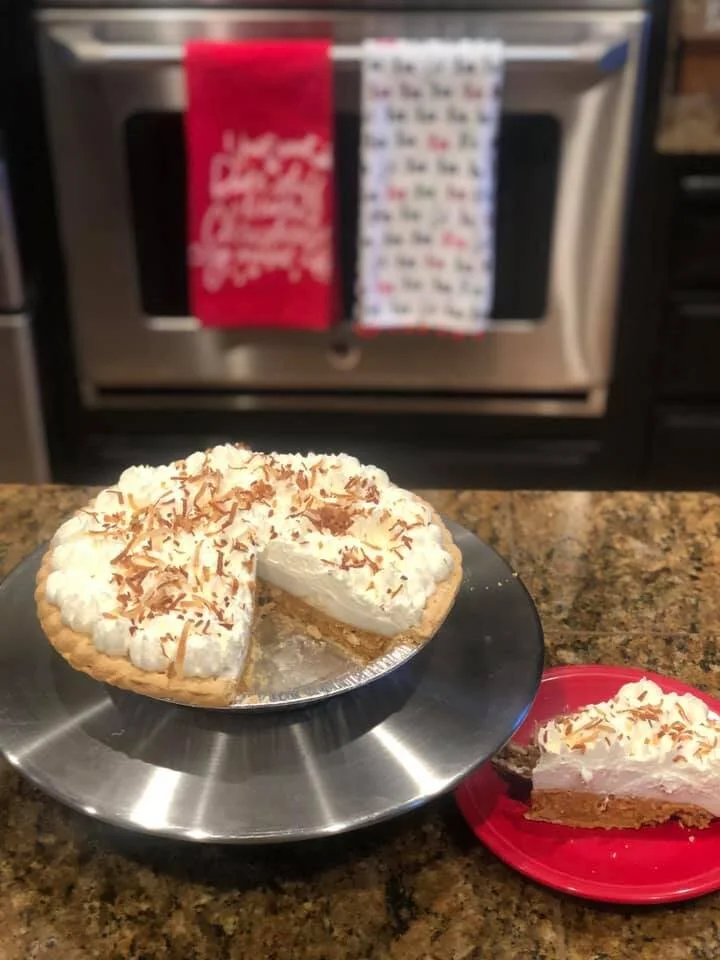
Haupia Pumpkin Pie
1 can (1 lb) pumpkin
2 eggs, slightly beaten
3/4 cup sugar
1/2 teaspoon salt
I teaspoon ground cinnamon
1/2 teaspoon ground ginger
1/4 teaspoon ground cloves
1 can (13 oz) evaporated milk
1-1/2 cups shredded coconut
9-inch unbaked pie shell
1 pkg (2-1/2 oz) haupia pudding mix
1 cup heavy cream, whipped and sweetened
Preheat electric oven to 425 degrees F. In a large bowl, combine pumpkin and eggs. Add sugar, salt, and spices. Stir in milk and 1 cup of the coconut. Pour into pie shell. Bake for 15 minutes; lower heat to 350 degrees F and bake about 40 to 45 more minutes or until filling is set. Cool. Prepare haupia pudding mix according to package directions. Cool slightly, then pour over pie. Chill until haupia is firm. Just before serving, spread whipped cream over pie. Sprinkle with the remaining 1/2 cup coconut. Makes 8 servings.
📸: Jessica Kinsella LeVan
-
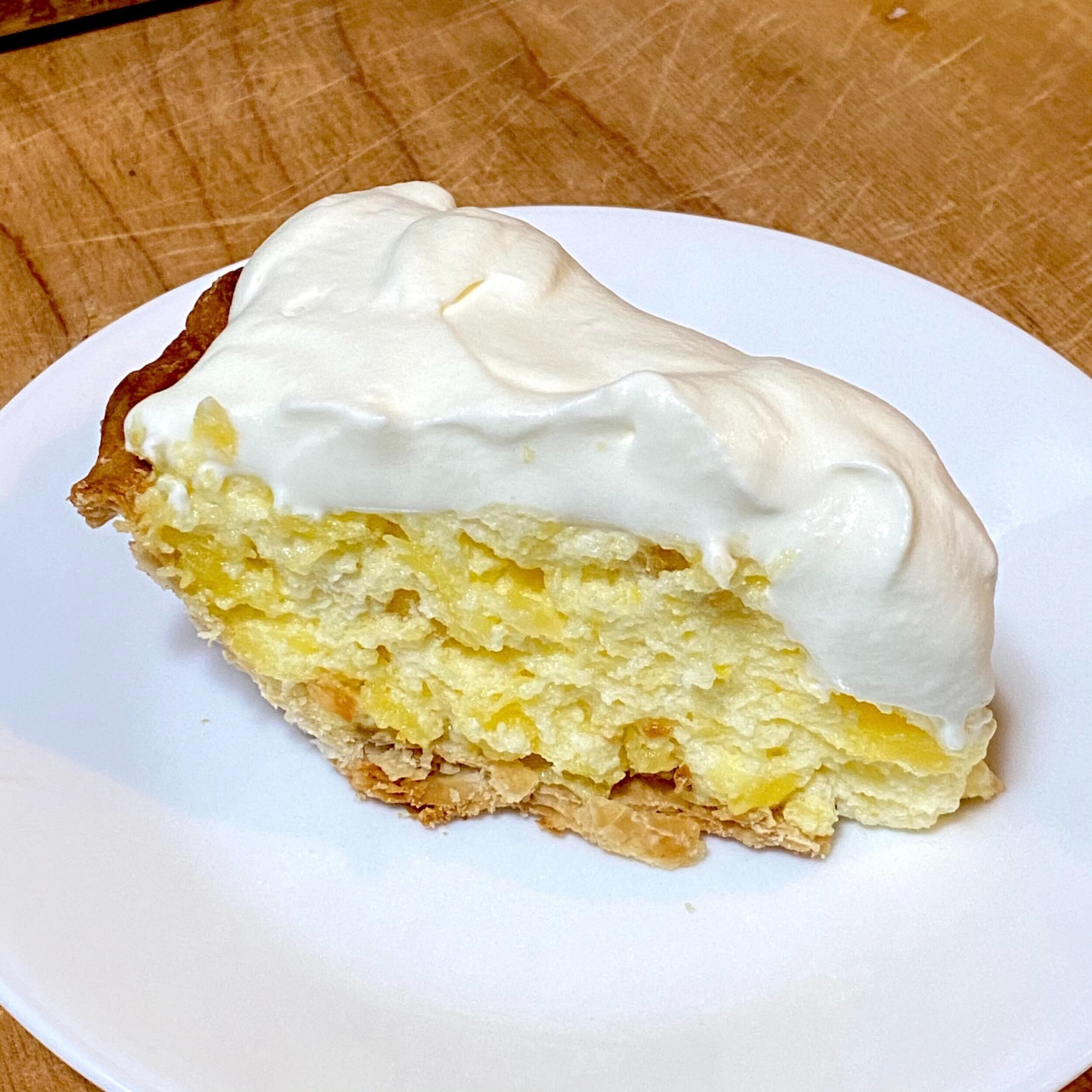
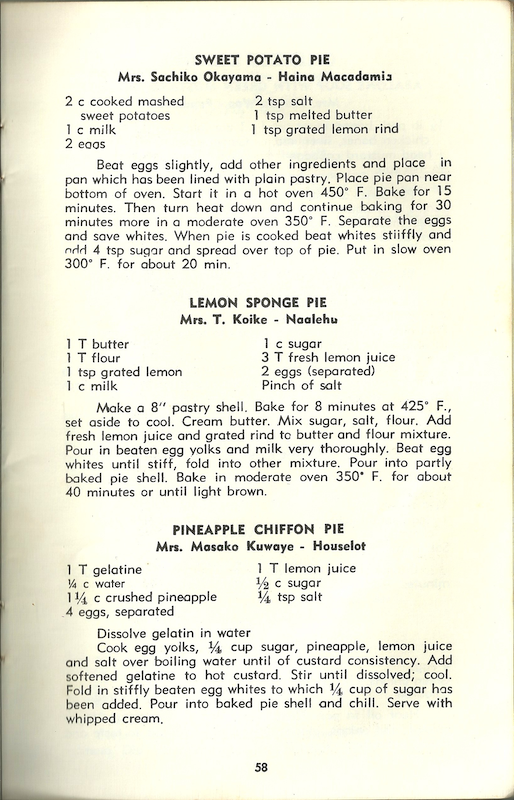
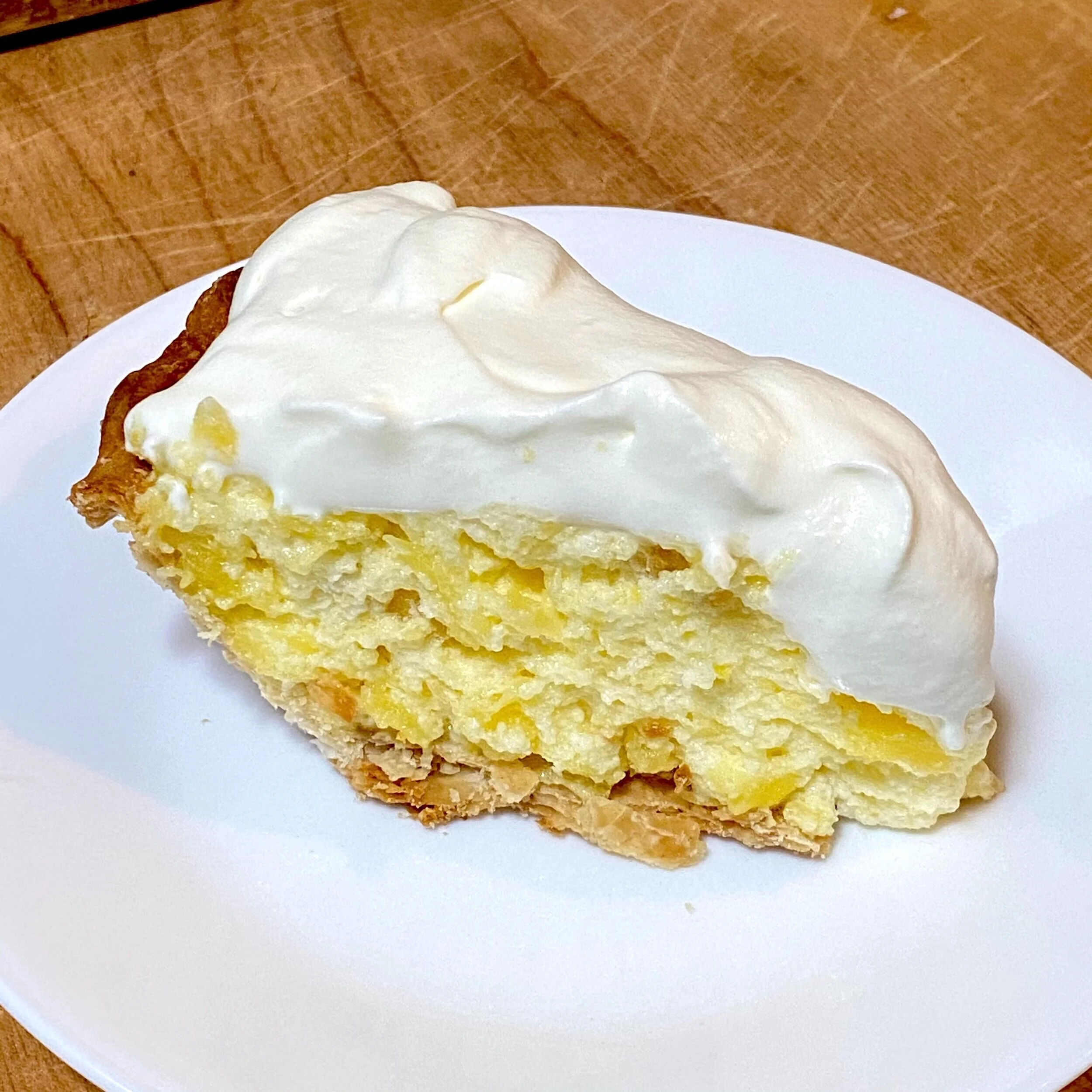
Pineapple Chiffon Pie
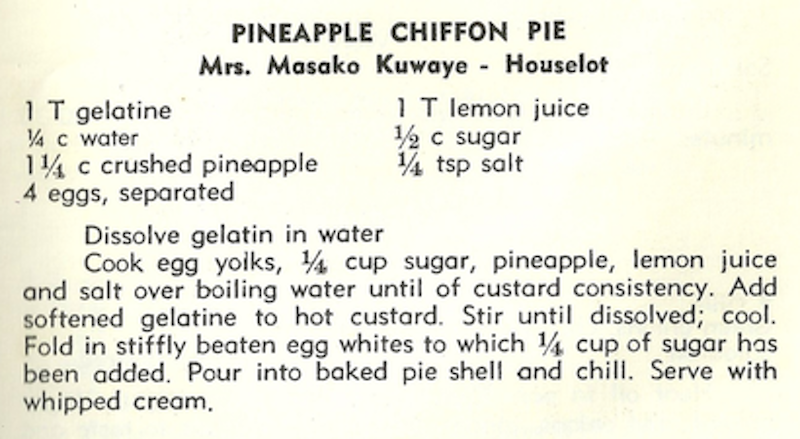
As far as I’m concerned, this pie is what canned crushed pineapple was born to do! The filling is a dream, with bits of pineapple suspended in a cloud-like custard. If you have concerns about using raw egg whites, beat them with the 1/4 c sugar in a double-boiler until they reach 160 degrees F, then finish beating off the heat until they reach stiff peaks. Cool before folding into the pineapple custard mixture.
-
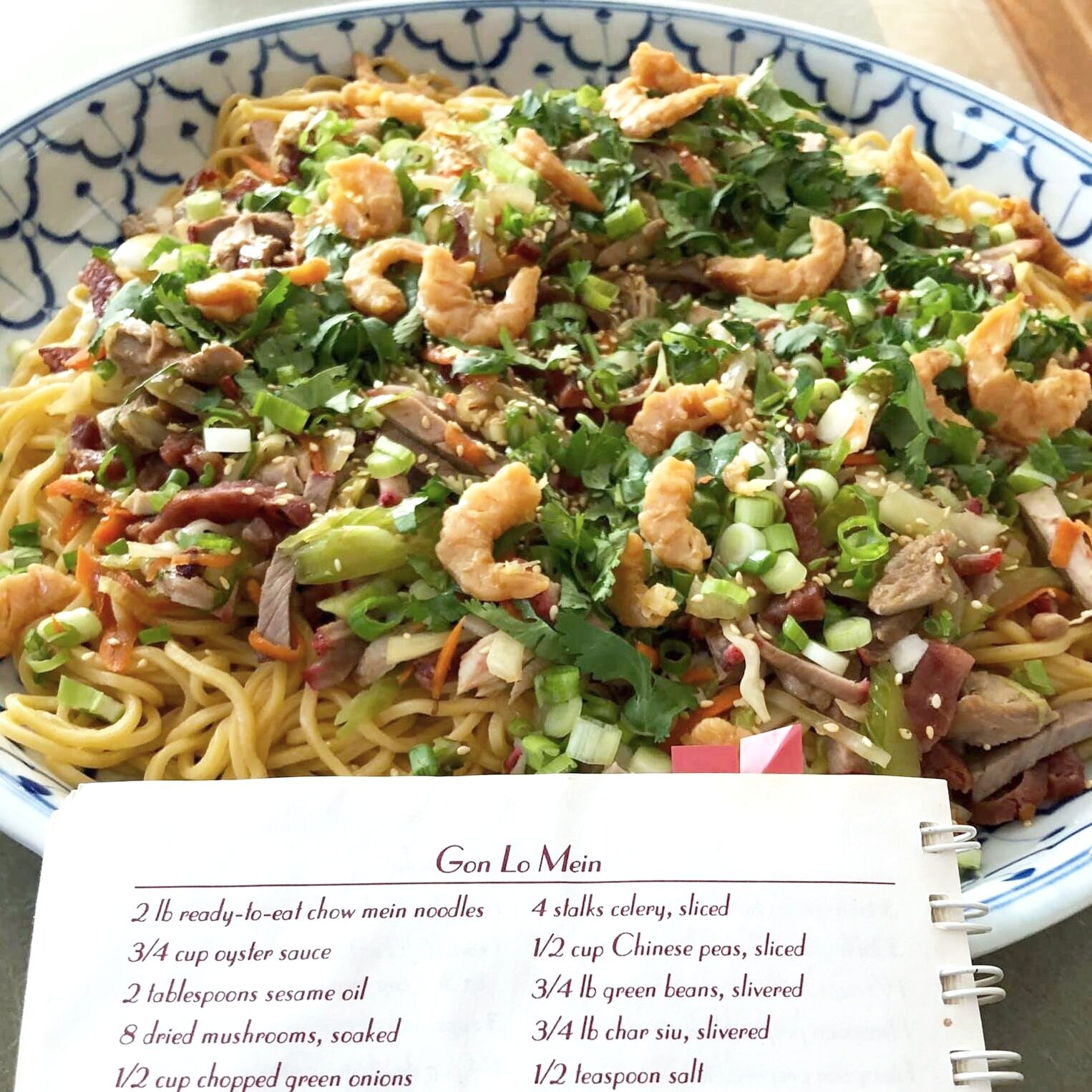
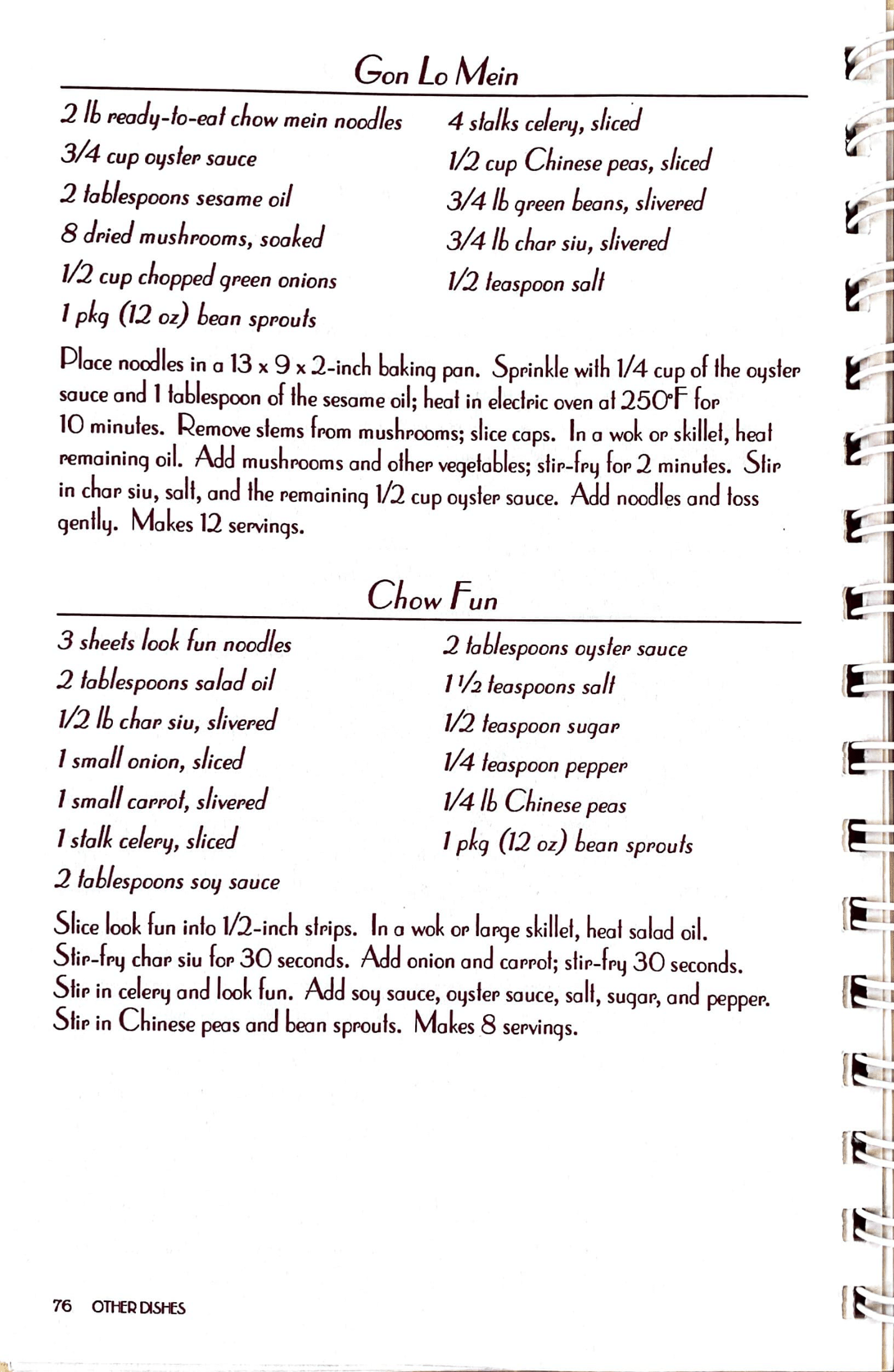
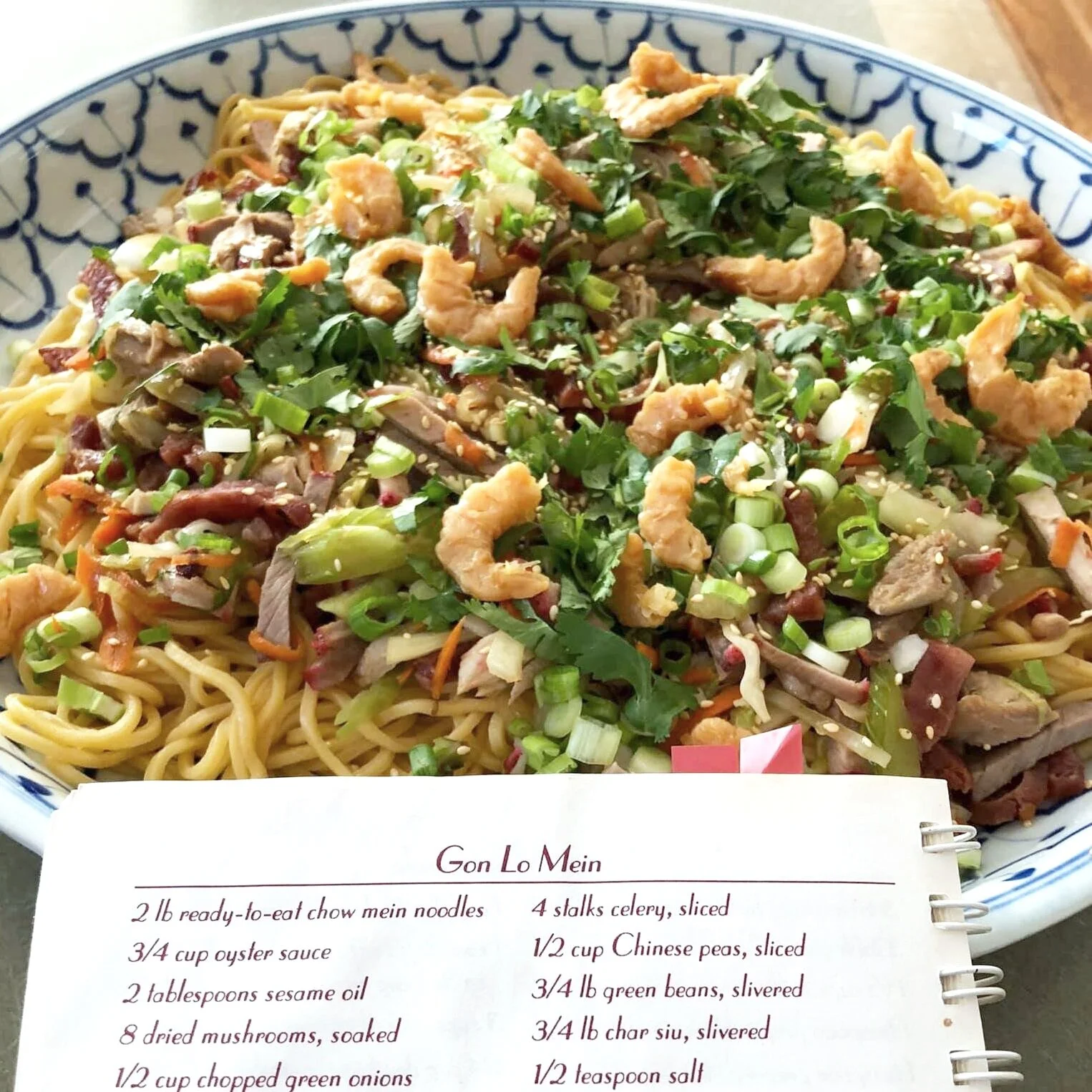
Gon Lo Mein
2 lb. ready-to-eat chow mein noodles
3/4 cup oyster sauce
2 tablespoons sesame oil
8 dried mushrooms, soaked
1/2 cup chopped green onions
1 pkg (12 oz) bean sprouts
4 stalks celery, sliced
1/2 cup Chinese peas, sliced
3/4 lb. green beans, slivered
3/4 lb. char siu, slivered
1/2 teaspoon salt
Place noodles in a 13x9x2-inch baking pan. Sprinkle with 1/4 cup of the oyster sauce and 1 tablespoon of the sesame oil; heat in electric oven at 250 F. for 10 minutes. Remove stems from mushrooms; slice caps. In a wok or skillet, heat remaining oil. Add mushrooms and other vegetables; stir-fry for 2 minutes. Stir in char siu, salt, and the remaining 1/2 cup oyster sauce. Add noodles and loss gently. Makes 12 servings.
📸: Nina Prior
-
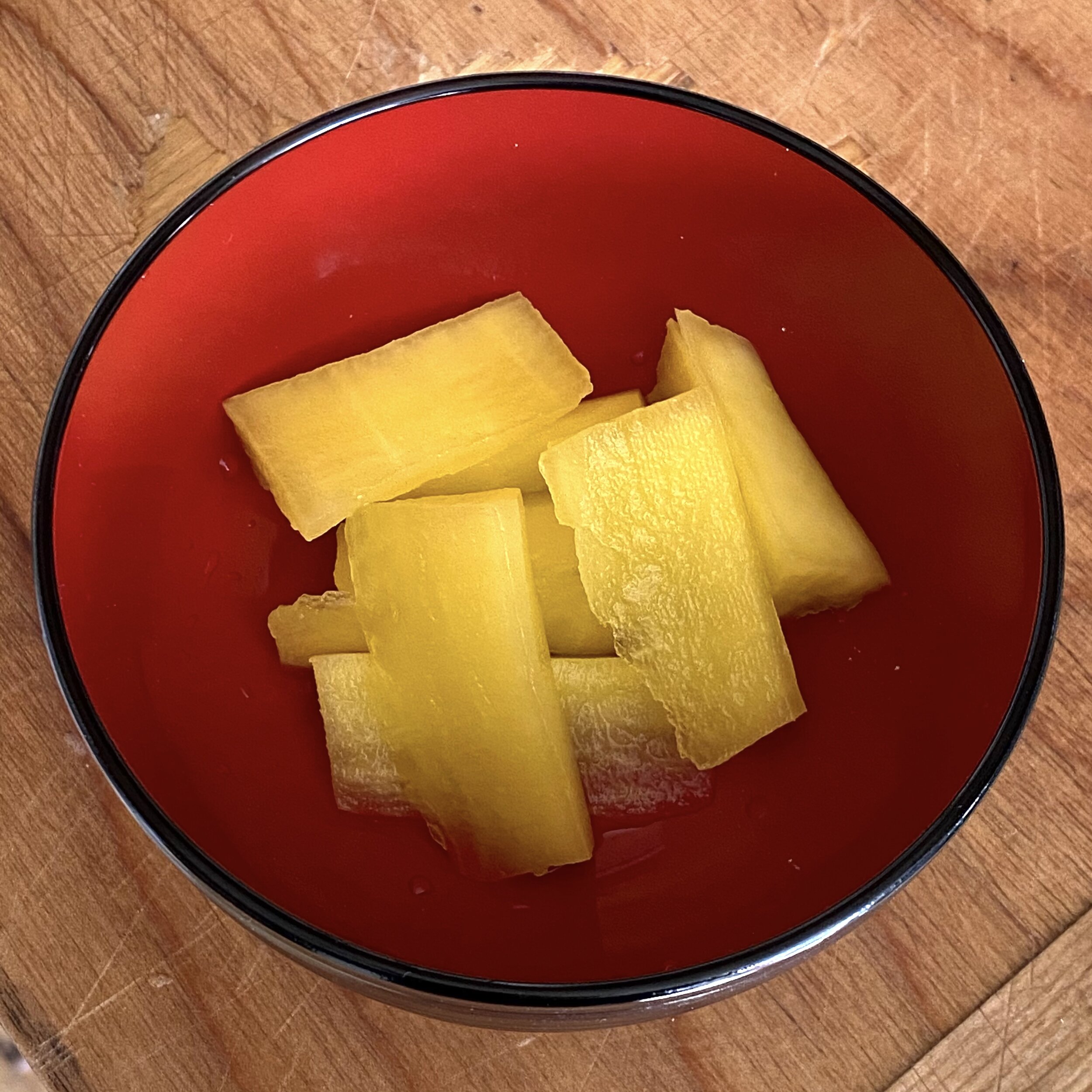
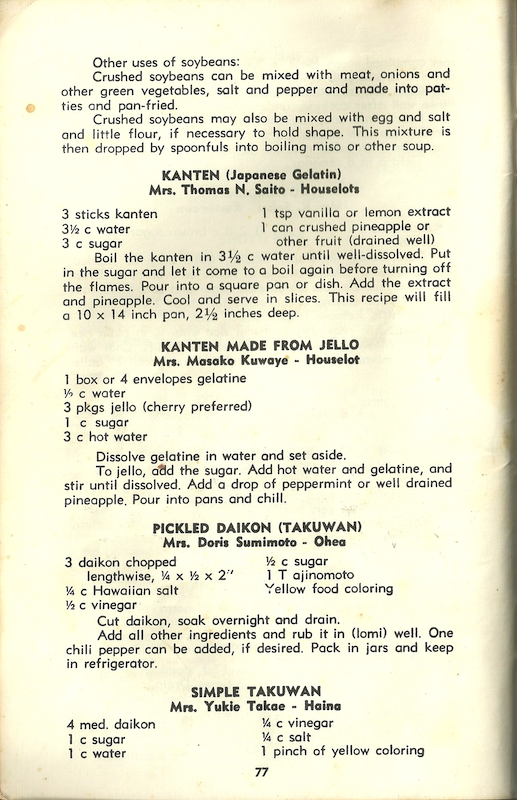
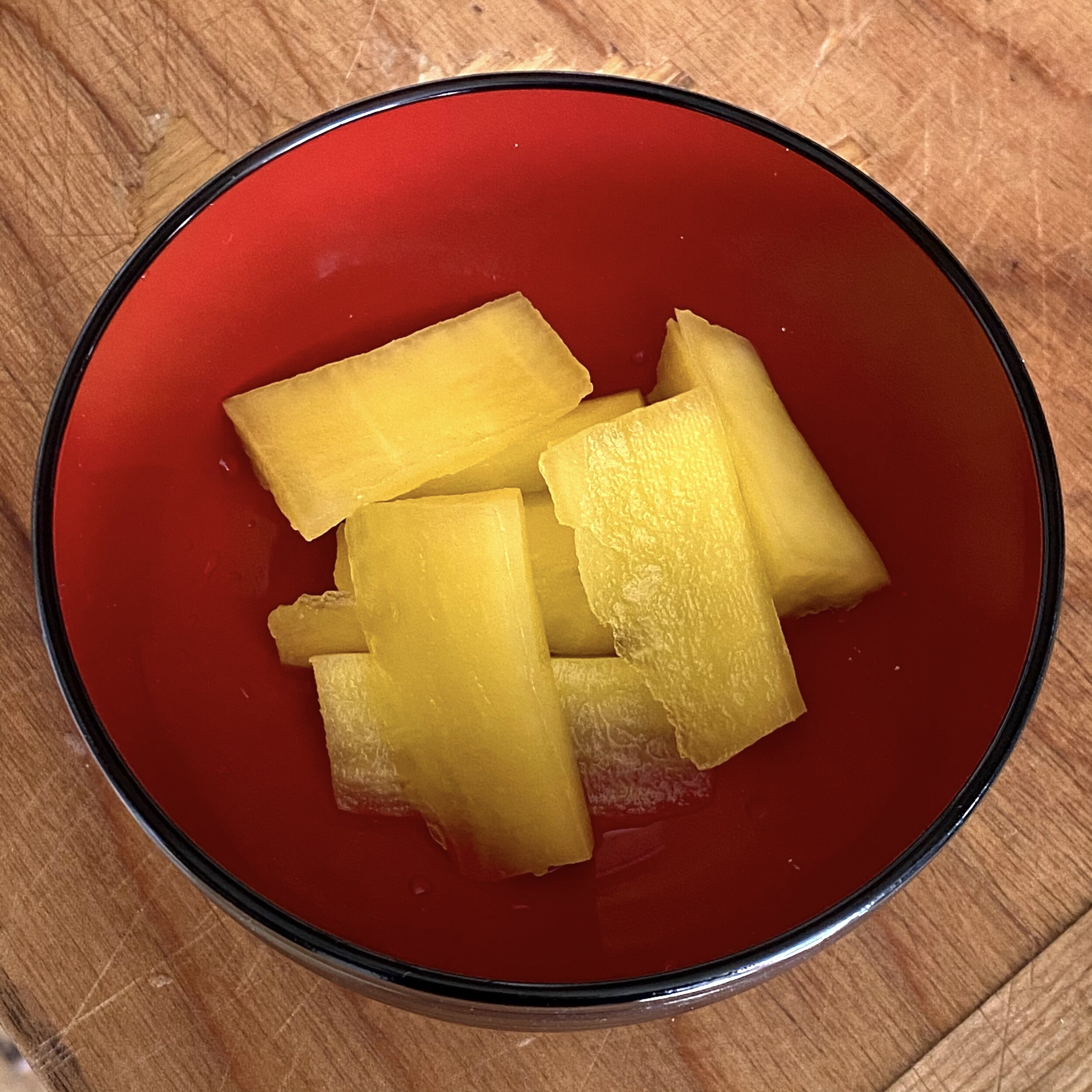
Simple Takuwan


Takuwan (takuan) is pickled daikon, a type of tsukemono, or preserved vegetable. In our house, we called tsukemono, “ko-ko,” which I’m just now learning is perhaps a pidgin pronunciation of the actual Japanese name, “okōkō.” My mom would serve just a tiny portion of ko-ko, nestled up against the rice, with every dinner. And yes, 99% of dinners included rice. It sounds fancy, but it wasn’t. It was just a matter-of-fact thing—a tiny bit of ko-ko needed to be next to the rice. While we’d cycle through a few different kinds of ko-ko depending on what was on sale, the one we had most often was takuwan. My mom loved it so much, she used to (still does) call me her “little takuwan.” Here’s a recipe for this ko-ko that is usually bright yellow, but if you are wary of food coloring, you are welcome to leave it out.
-
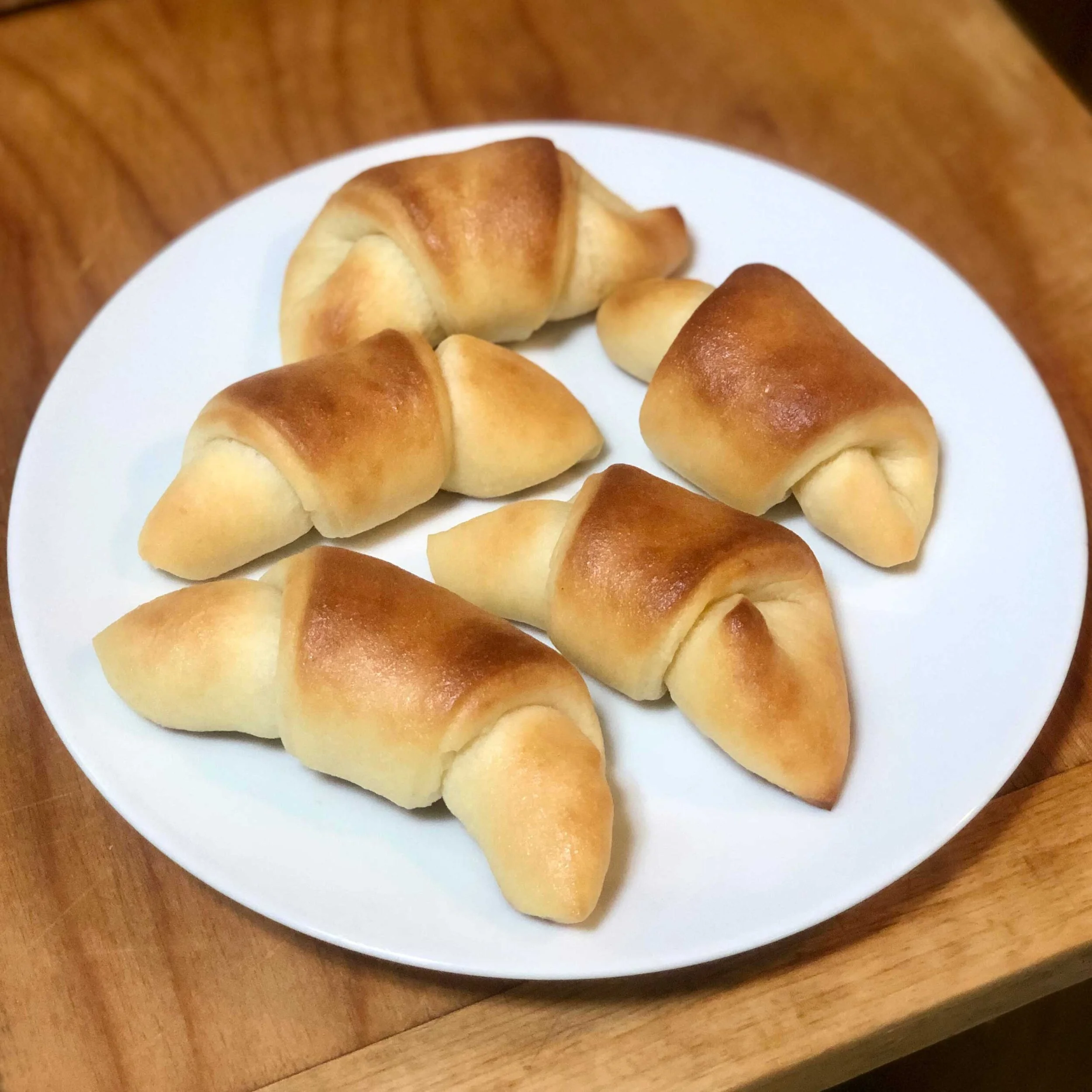
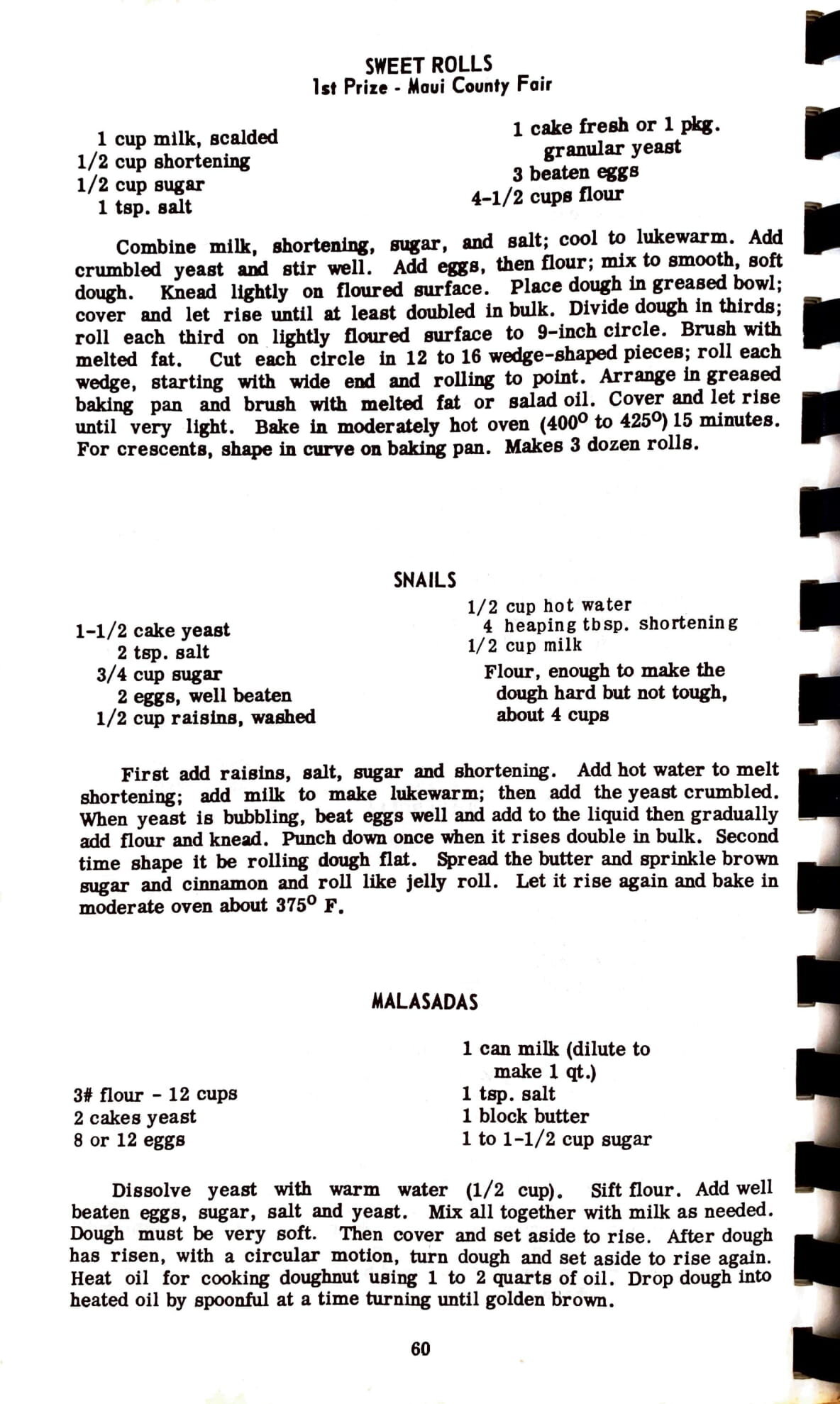
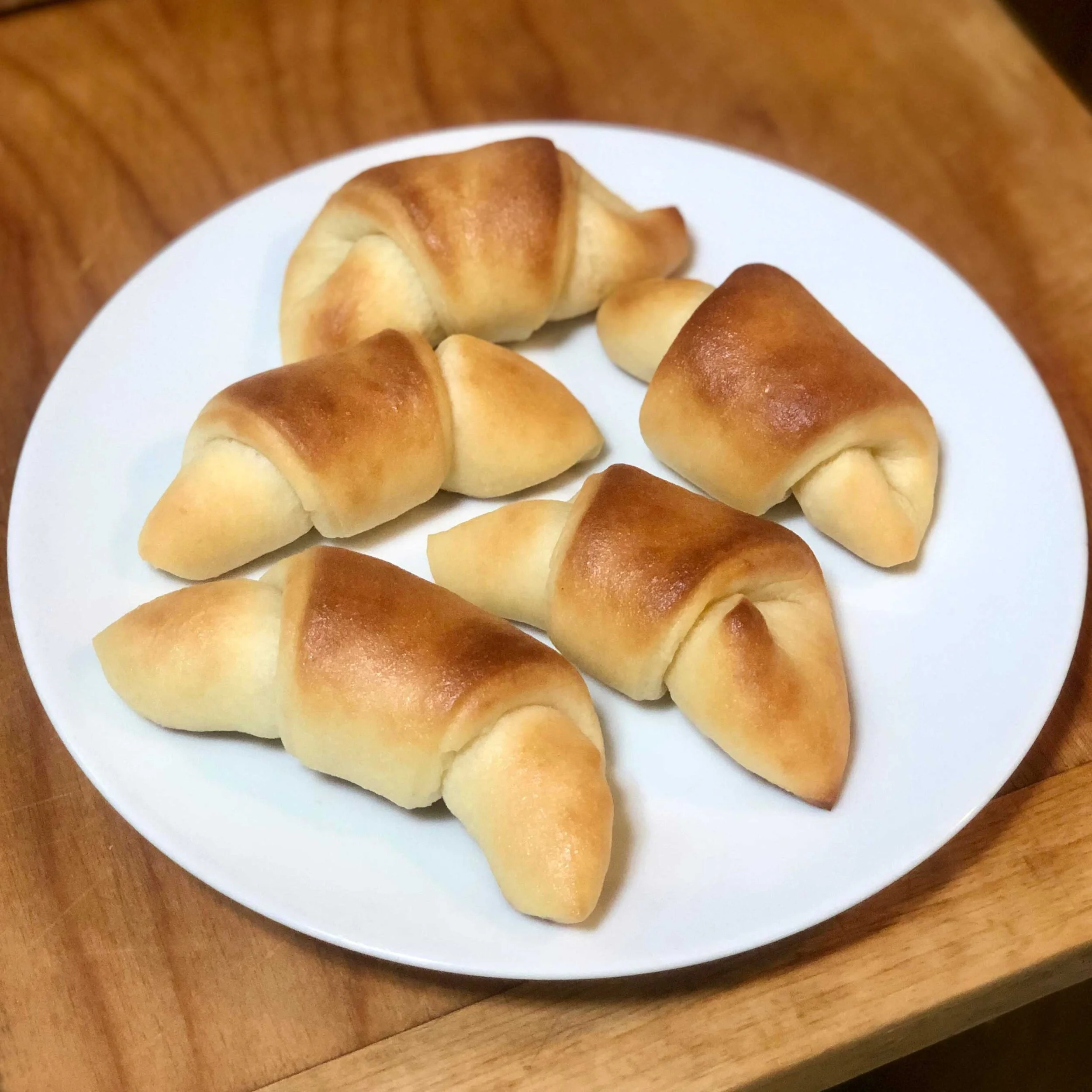
Sweet Rolls – 1st Prize Maui County Fair
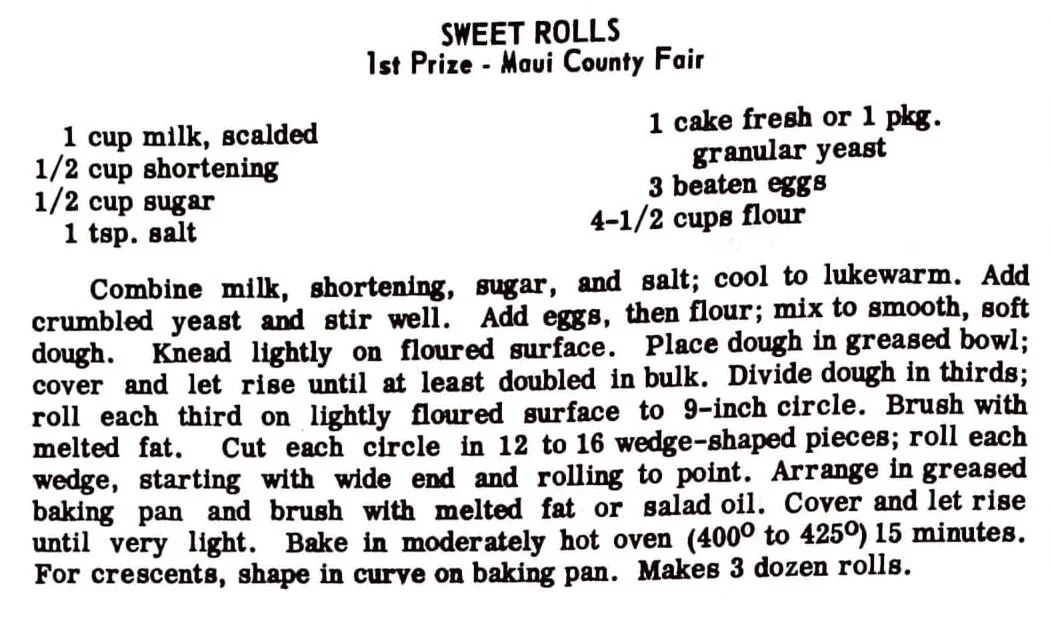
What delicious little rolls! I made these for Thanksgiving dinner and they were so yummy plain or slathered with butter and dipped in gravy. OMG. They are light and slightly sweet. They were also fun to make, but be sure to account for two rising cycles.
-
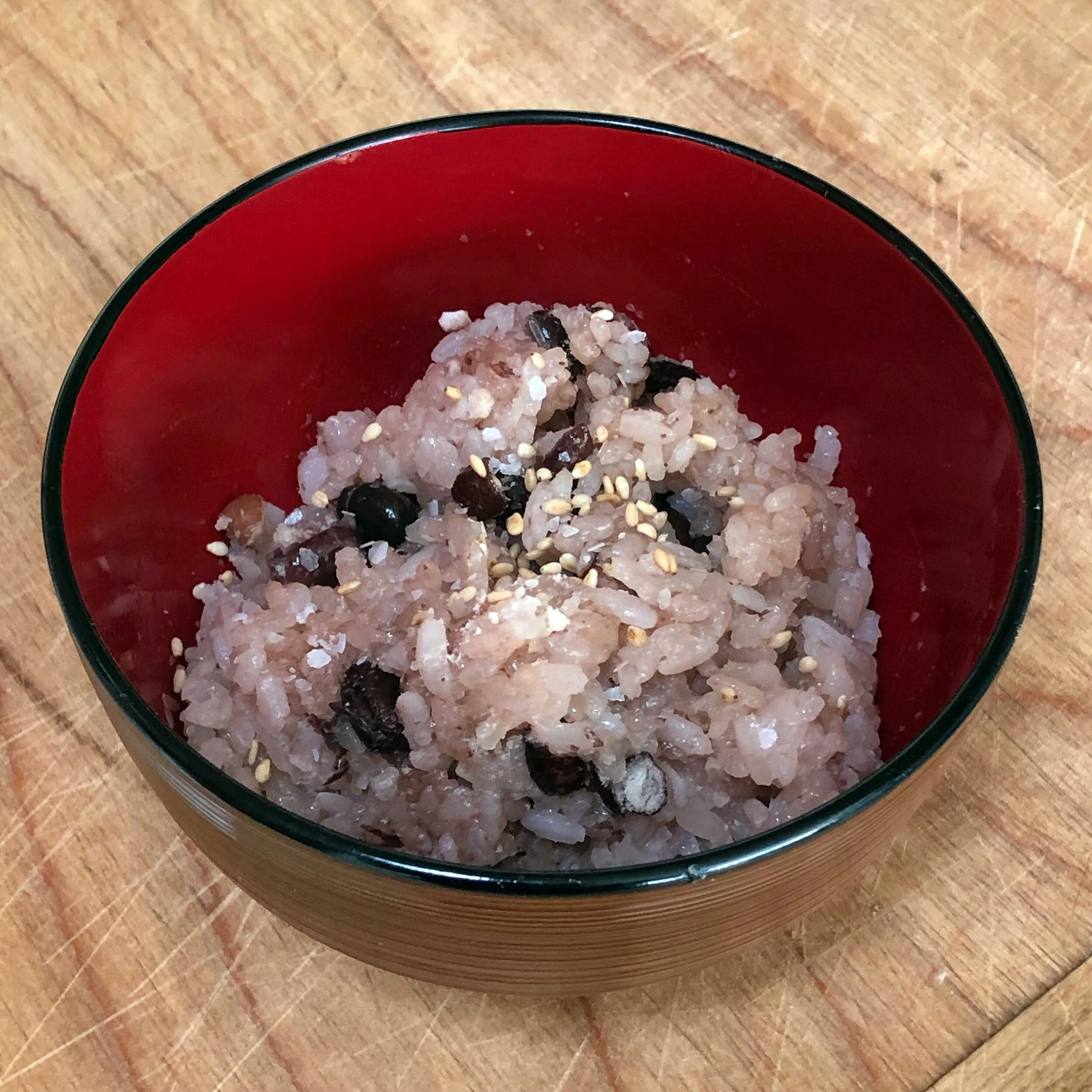
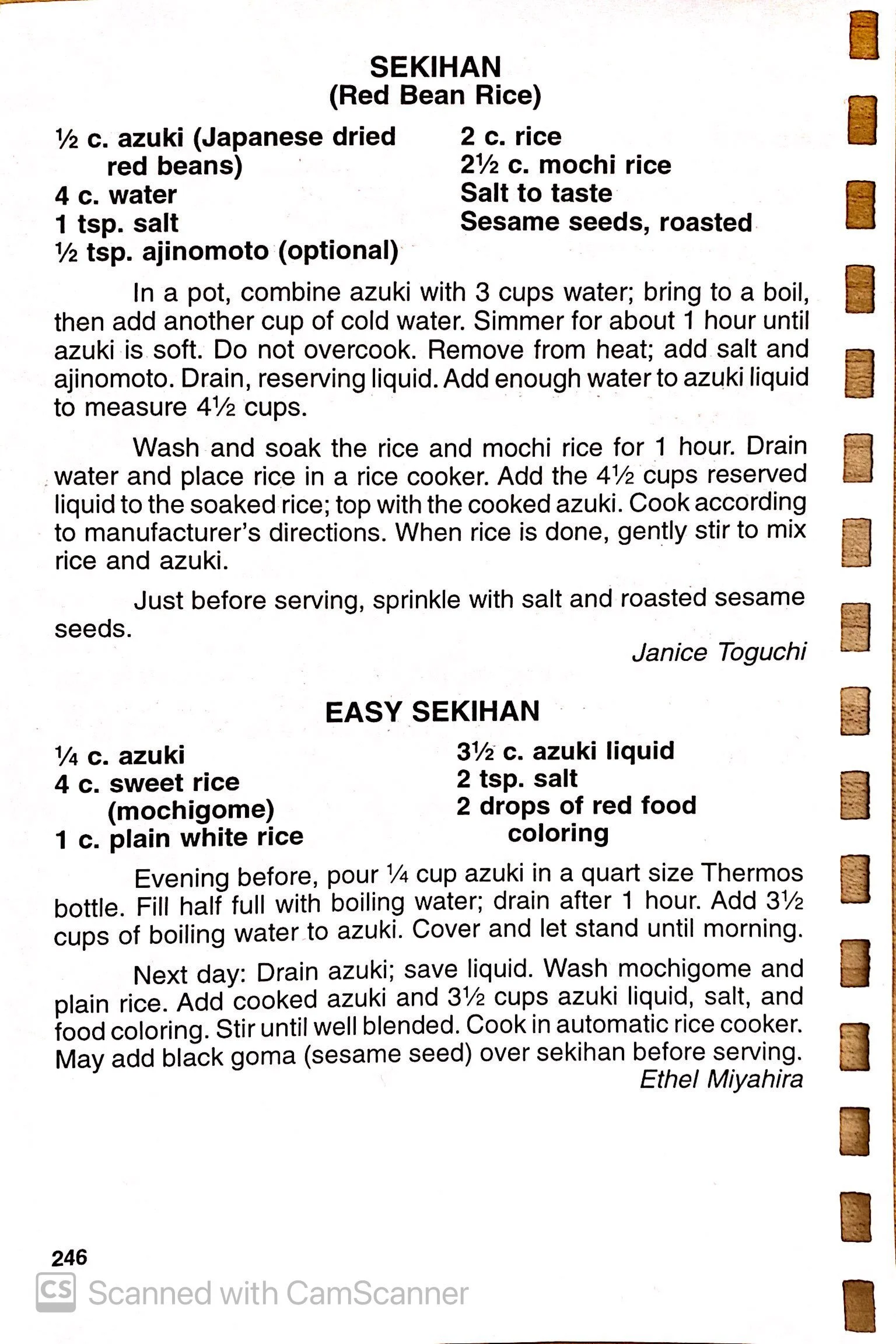
Sekihan (Red Bean Rice)
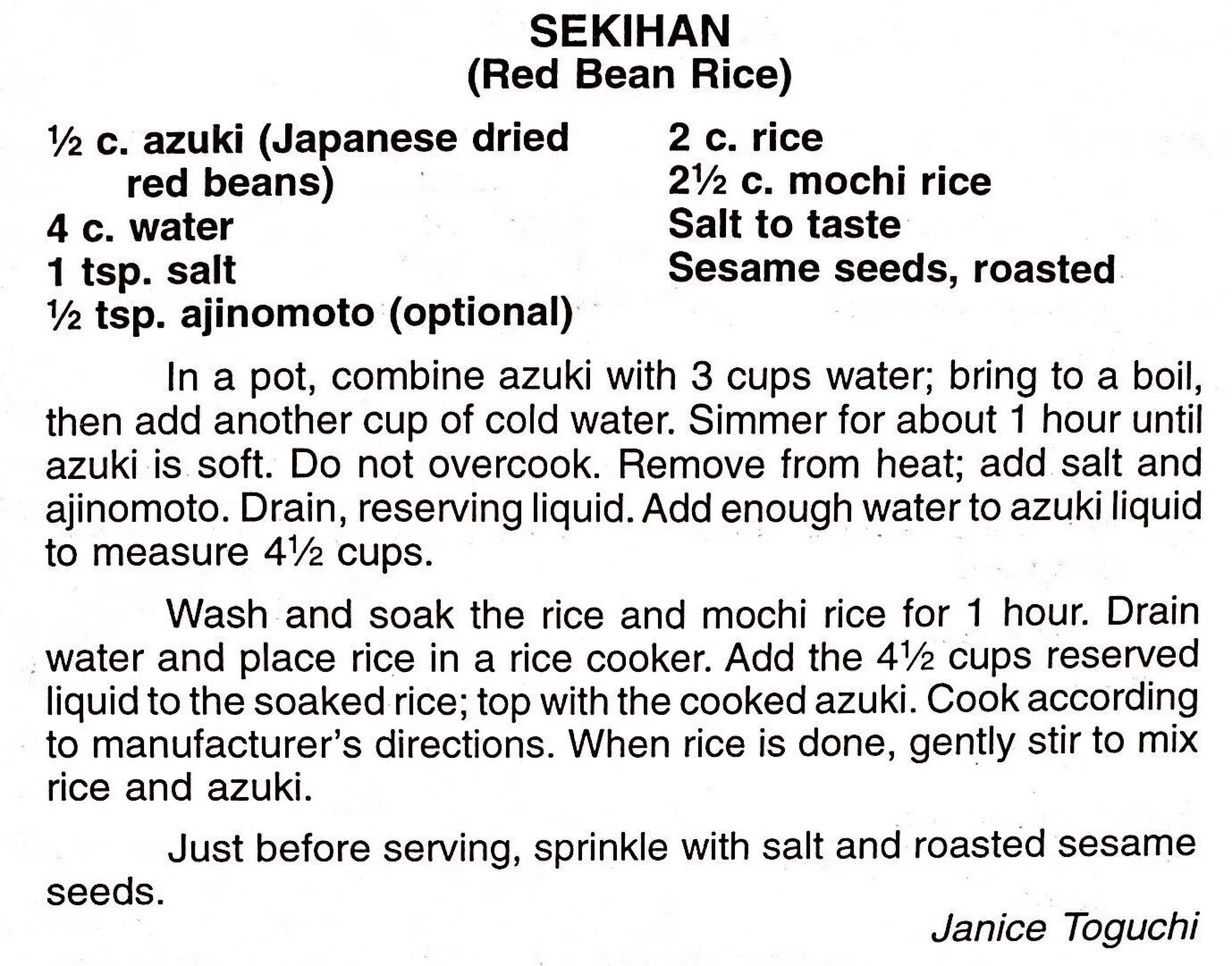
📕 Important: Be sure to use the same measuring cup for all dry and wet ingredients. For example, if you use the cup that came with your rice cooker to measure your rice, you must use that same cup to measure the water, too. If you use the standard US measuring cup (8oz) to measure your rice, you must use that same cup to measure the water. If you mix and match these cups, your sekihan may turn out too wet or too dry. While this recipe doesn’t explicitly state it, I believe this recipe is written based on using the cup that came with your rice cooker.
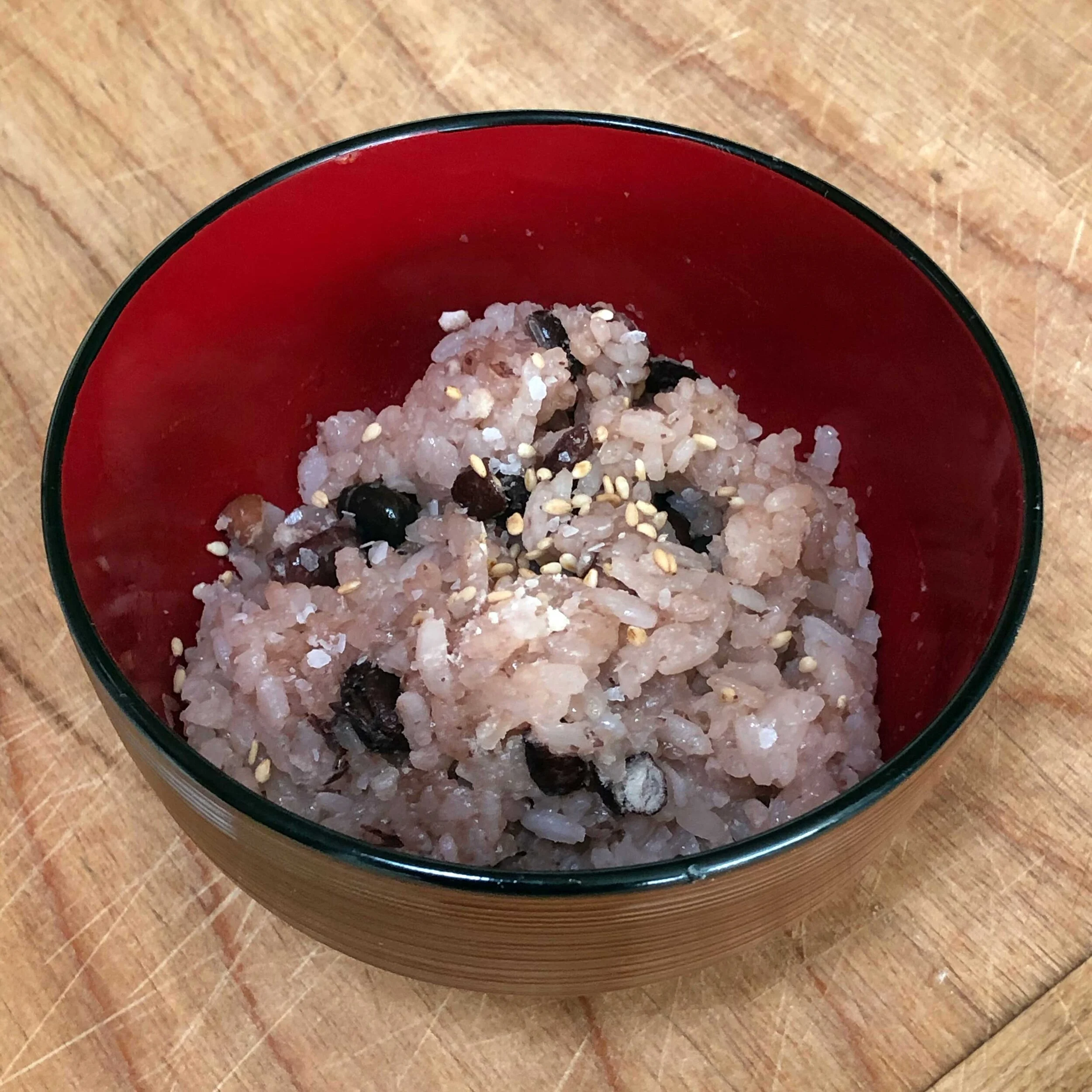
Sekihan is my spirit food—a dish that runs through my veins. It is one of my favorites, which means that every time I visited my grandma, she had a huge batch of it ready when arrived. She made it the “old fashioned” way, using a stovetop steamer. This recipe uses a rice cooker, which I can handle! The dish is meant to bring good luck with its red color, which it gets from the liquid used to pre-cook the azuki beans. The beans infuse the rice with a subtle nutty flavor, which is heightened by a sprinkling of salt and sesame seeds before serving.
Legend has it that breaking beans brings bad luck. I haven’t mastered that part, so you can see at least one broken bean in the photo below. 🤷🏻♀️ Sekihan, while technically red beans with rice, is very different from the Louisiana Creole dish, red beans and rice. Sekihan uses azuki beans, short-grain sticky rice, and no seasonings during cooking. Red beans and rice uses kidney beans, long-grain rice, and lots seasonings while cooking.
-
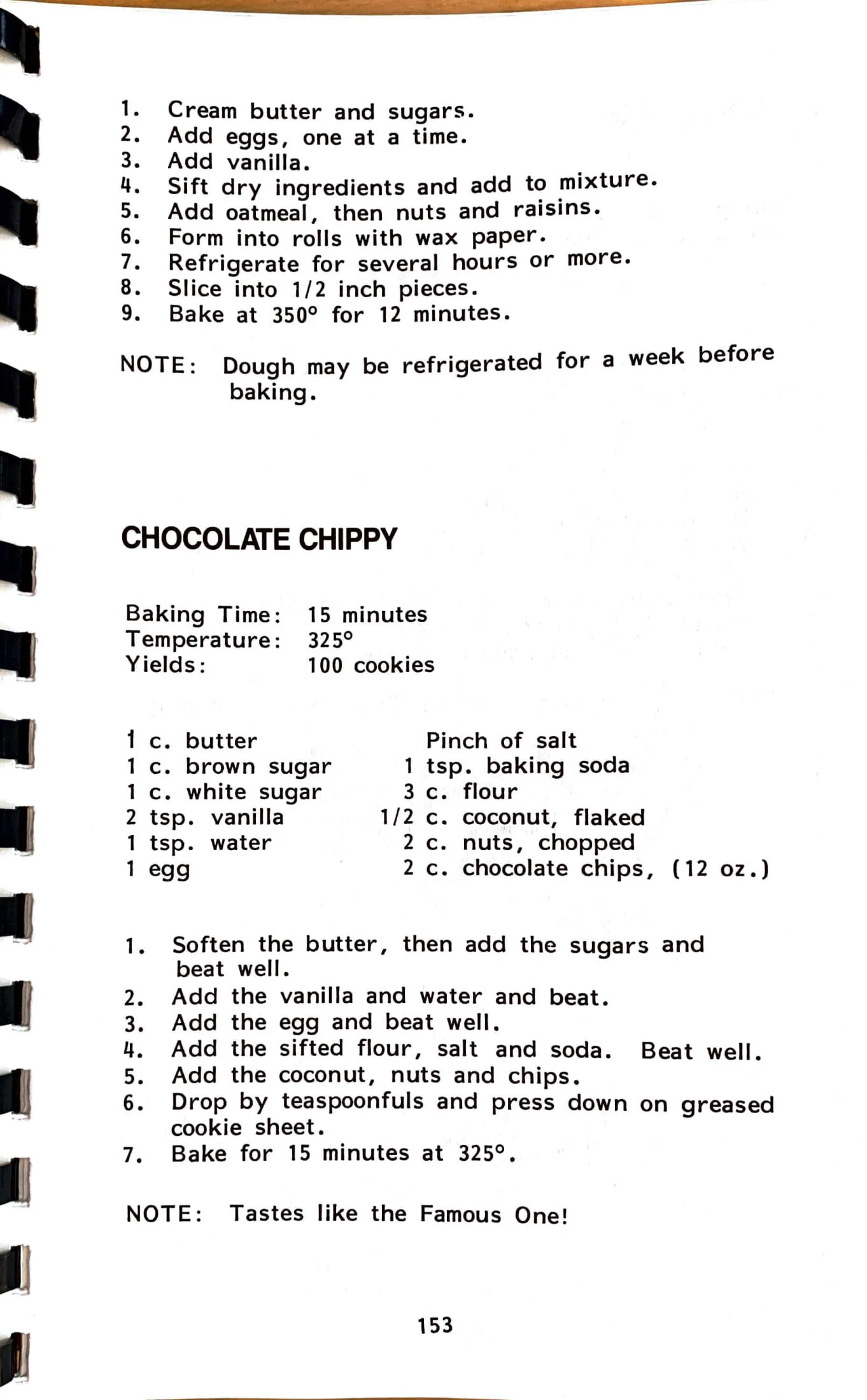
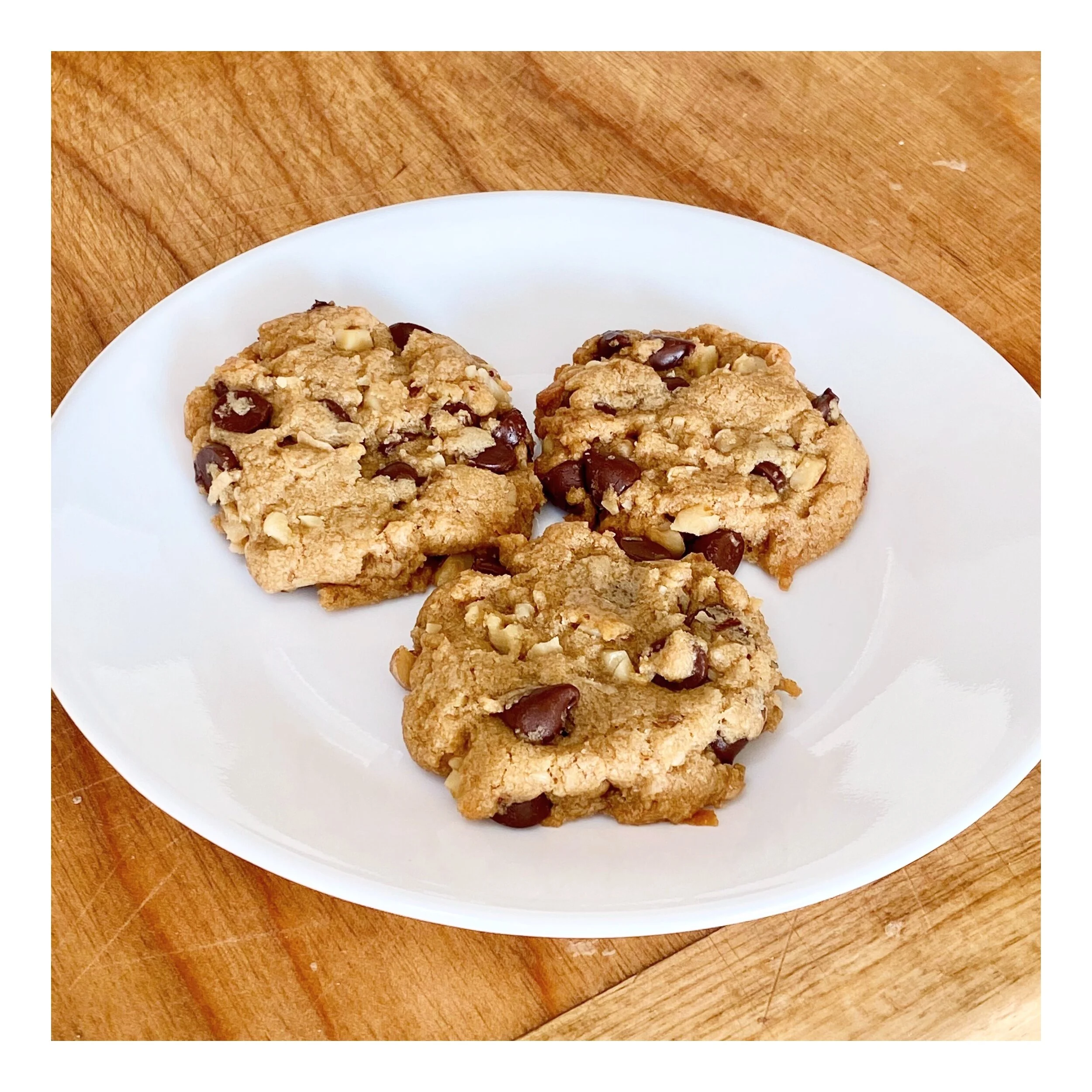
Chocolate Chippy
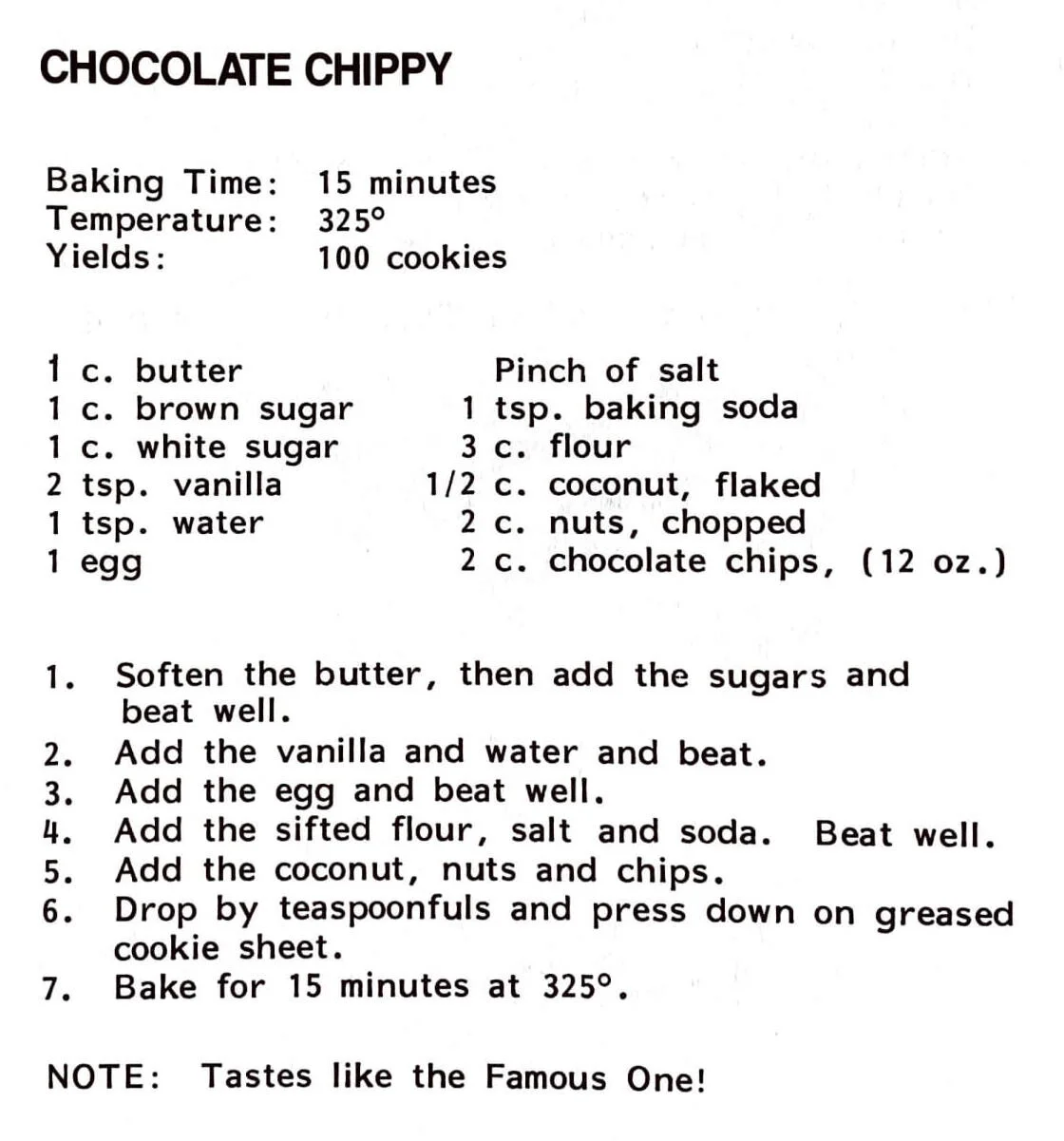
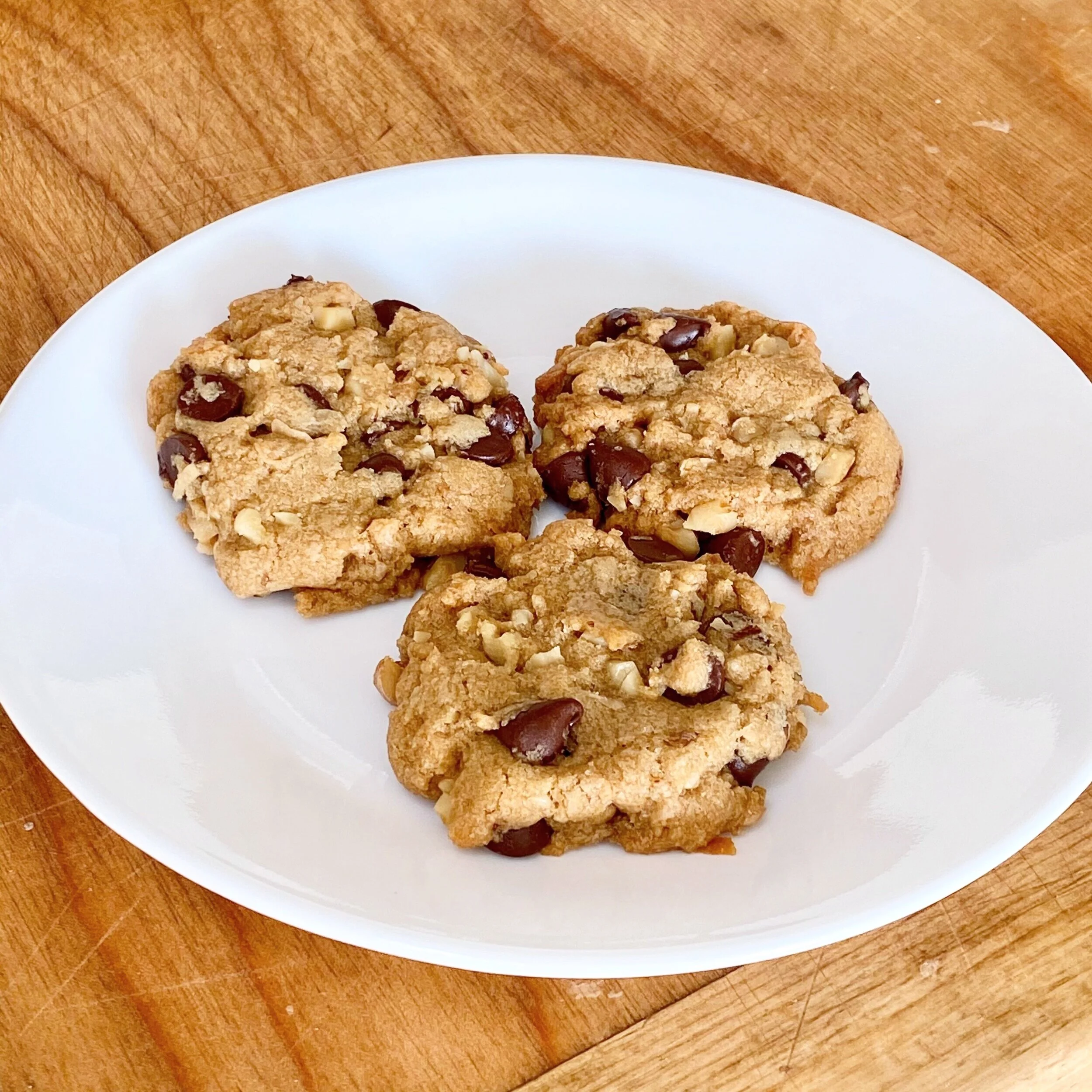
Did I really just find my favorite chocolate chip cookie recipe of all time? Yes. Yes, I did! Very crispy all around, with a small chewy center — it is truly the G.O.A.T. 🍪! The key to understanding why I tried this recipe in the first place is the note at the bottom of the recipe above. By the “Famous One,” the recipe author is referring to Famous Amos cookies. However, not the current incarnation made in a Keebler factory and that you get in a little plastic bag on airline flights. Famous Amos was started by Wally Amos in Hawai’i back in the 1970s and was a huge hit.